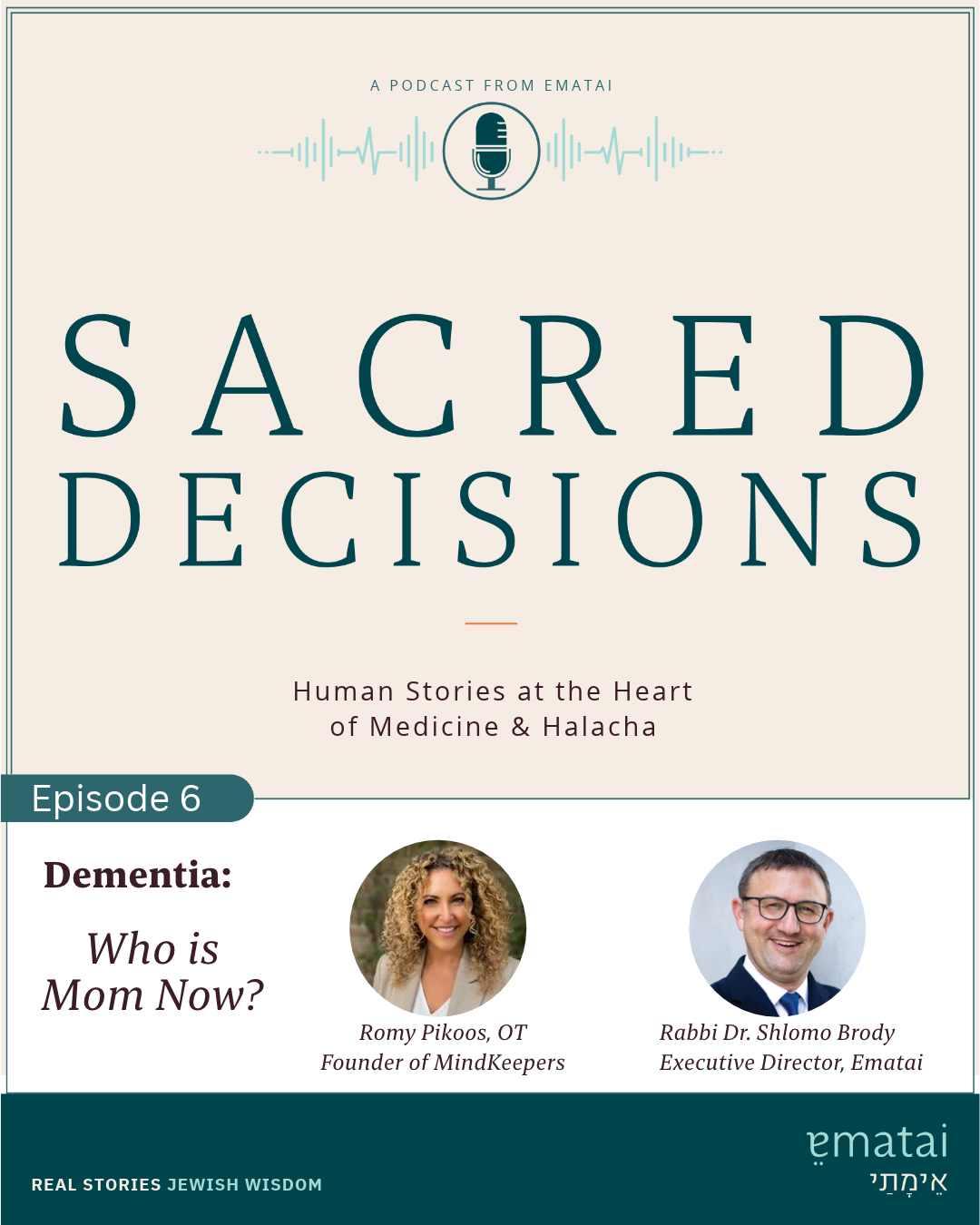
When someone develops dementia, how do we continue to see the person beyond the diagnosis?
Rabbi Dr. Shlomo Brody speaks with occupational therapist Romy Pikoos about maintaining connection, dignity, independence, and a sense of purpose throughout dementia. Romy discusses why families should focus on what a person can still do, how to understand changes in behavior, and why meaningful connection does not depend on memory or conversation alone.
They also explore the importance of having conversations early, not only about advance planning and future care, but about a person’s history, memories, interests, and experiences. These details can become important ways for families to connect as dementia progresses.
Romy also shares practical approaches for caregivers, including looking for the emotion or need behind a behavior, avoiding testing a person’s memory, finding activities to do together, and continuing to give a loved one opportunities to contribute and feel useful.